
You do not need to see a mouse running across the kitchen floor to know that one may be hiding in your home.
Mice are cautious, small and often most active when the house is quiet. In many cases, the first clue is not the animal itself, but droppings, scratching noises, damaged food packaging or marks along walls and cupboards.
So, how can you tell if you have mice?
The best approach is to look for several signs rather than relying on one clue alone. The British Pest Control Association identifies droppings, odour, smear marks, nests, damaged food and gnawing as common evidence of mouse activity. You can read more in the BPCA guide to mice.
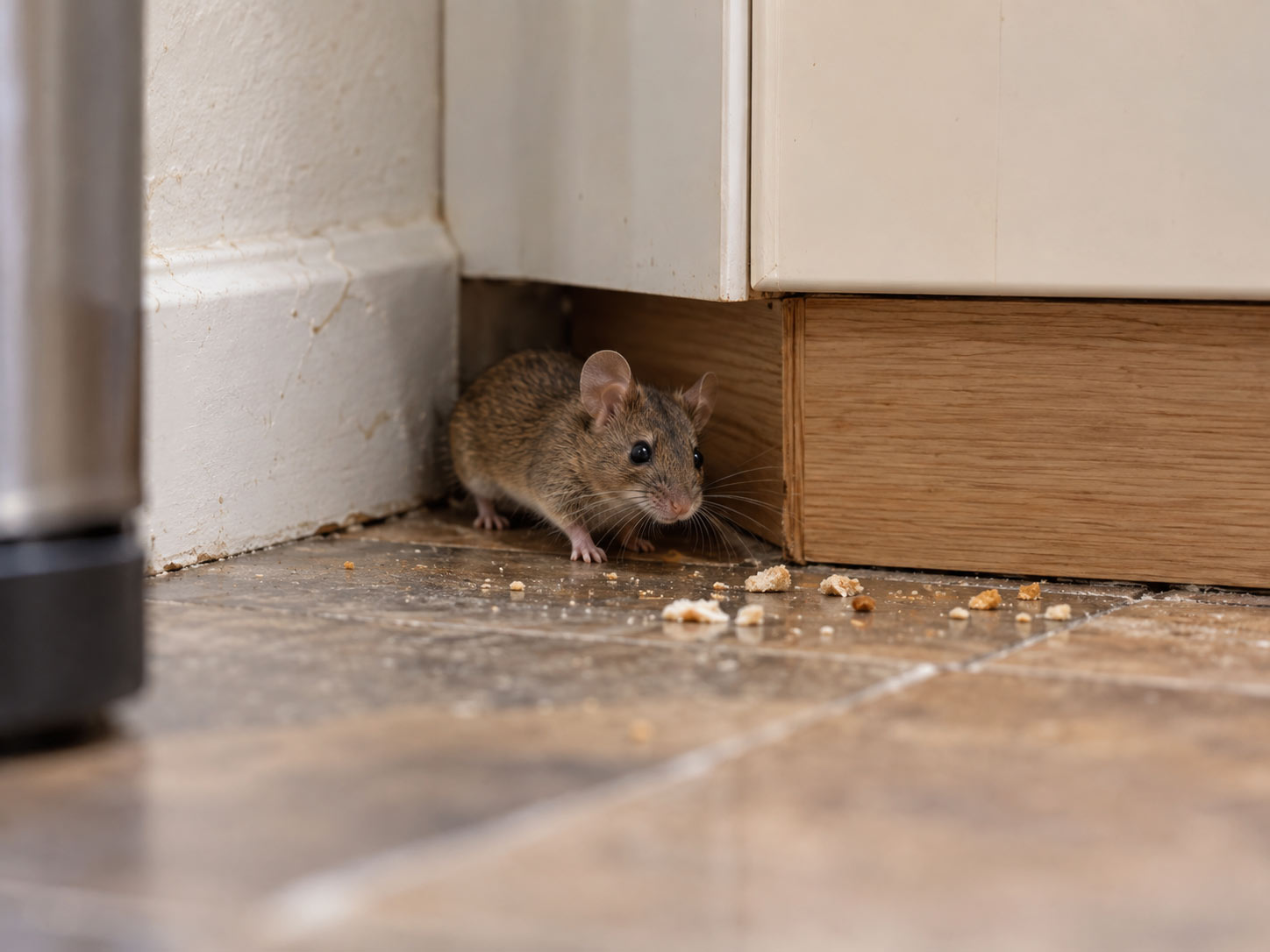
1. Small, Dark Droppings
Mouse droppings are one of the most common signs people notice first.
They are usually small, dark and narrow, often compared to grains of rice. UK Government guidance describes mouse droppings as approximately 3–7 mm long and spindle-shaped.
They are often found inside kitchen cupboards, under sinks, behind appliances, near skirting boards, in utility cupboards, loft spaces and close to stored food.
A few old droppings do not always mean mice are still active. What matters more is whether new droppings appear after the area has been cleaned.
Avoid touching rodent droppings with bare hands.
2. Scratching or Scurrying Noises
Another common clue is noise.
You may hear scratching, rustling or quick movement coming from walls, ceilings, lofts or beneath floorboards. These sounds are often easier to notice at night when the property becomes quiet.
Barnet Council notes that scratching and scrabbling sounds in cavity walls, ceilings and under floors may indicate mouse activity.
However, sound alone is not enough to confirm mice. Pipes, birds and other animals can sometimes produce similar noises.
If the noise repeatedly comes from the same wall, our guide on how to get rid of mice in the walls explains what to look for next.
3. Gnawed Food Packaging
Mice gnaw regularly, so damaged food packaging can be an important clue.
Small holes or chew marks may appear on cereal boxes, flour packets, pet-food bags, cardboard boxes or plastic containers. The damage is often hidden at the back of cupboards and may only become visible when items are moved.
The BPCA notes that mice may gnaw wood, paper, food packaging, furniture and electrical cables.
Any food that has been gnawed or may have been contaminated should be discarded.
Chewed electrical wiring should be treated more seriously. Oxford City Council warns that mouse gnawing can damage cables and create a fire risk. If you discover damaged wiring, avoid touching it and arrange for a qualified electrician to inspect it.
4. Greasy or Dark Marks
Mice often move repeatedly along the same routes, usually close to walls and edges.
Over time, this can leave dark or greasy smear marks where their fur brushes against surfaces. These marks may appear along skirting boards, pipework, cupboard edges or small openings around cables.
Government rodent-control guidance explains that grease from rodents’ bodies can collect dirt and leave visible marks along frequently used routes.
A single dark patch may simply be dirt, but repeated smudges combined with droppings or gnawing are more significant.
5. Shredded Nesting Material
Mice prefer warm, sheltered and undisturbed areas.
They may collect paper, cardboard, fabric or insulation to create nesting material. These nests may be hidden in lofts, wall voids, beneath floorboards, inside cupboards or behind kitchen units.
The BPCA identifies lofts, airing cupboards and spaces beneath floors as possible nesting locations.
If you notice shredded material together with droppings or food damage, inspect the surrounding area carefully.
6. A Strong or Unusual Smell
Mouse activity can sometimes create a persistent musky or ammonia-like smell.
The odour may be stronger inside cupboards, loft corners, utility spaces or behind appliances.
The BPCA lists a strong ammonia-like smell as one possible indication of mouse activity.
However, smell alone is not enough to identify the cause. Damp, drains and plumbing problems can also create unusual odours. If the smell appears in the same area as droppings or damaged food, mice become a more likely explanation.
7. Damaged Food or Unexplained Crumbs
Mice are attracted to easily accessible food.
You may notice small holes in packets, crumbs inside cupboards, gnawed corners on boxes or damage to pet-food packaging.
Hastings Borough Council lists feeding damage, smear marks and droppings among common signs of mice.
If you find damaged food packaging, inspect the nearby cupboards and gaps around pipes or wall edges. The feeding area may be close to a route that mice are using to move through the property.
8. Tiny Footprints or Tail Marks
Tracks are less obvious than droppings, but they can sometimes appear in dusty or rarely disturbed areas.
UK Government rodent guidance identifies footprints, tail marks and regular runways as useful evidence of activity.
Look behind appliances, in lofts, storage rooms and around pipework. Using a torch from a low angle can make small marks easier to see.
Tracks are most useful when they appear near another sign, such as droppings or a possible entry point.
9. Seeing a Mouse
Seeing a mouse clearly confirms that at least one has entered the property.
However, one sighting cannot tell you how many mice are present.
Pay attention to where you saw it, when it appeared and where it ran. The route it takes may help reveal a gap, cupboard, wall cavity or other concealed space.
Check the surrounding area for droppings, damaged food or gnaw marks.
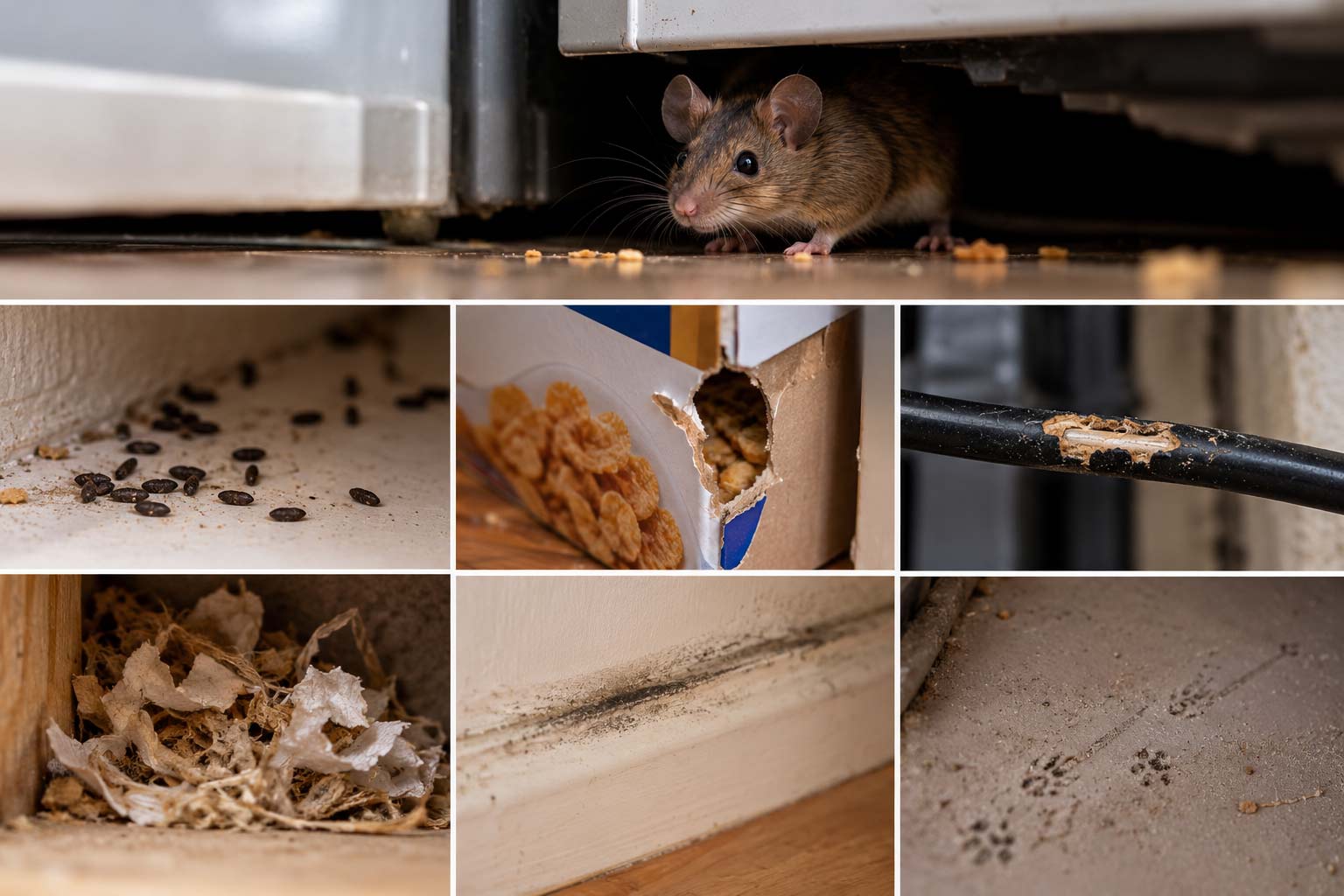
Where Should You Check First?
If you suspect mice but have not found clear evidence, start with areas that provide both food and shelter.
The kitchen is usually the best place to begin. Check beneath the sink, behind the fridge and cooker, inside lower cupboards, around pipes and behind kitchen units.
After that, inspect lofts, utility cupboards, storage rooms and other dark, undisturbed locations.
Oxford City Council notes that mice may nest beneath floors, inside wall cavities and in warm areas such as airing cupboards.
Once you identify activity, the next question is how the mice entered.
Our guide on how mice get into your house explains the most common access points and where to inspect them.
Mouse or Rat: How Can You Tell?
One useful clue is the size of the droppings.
Mouse droppings are typically only a few millimetres long, while rat droppings are usually considerably larger.
However, droppings should not be used as the only identification method. Government guidance notes that droppings from young rats can sometimes be confused with those from mice.
The size of gnaw marks, footprints, noises and entry holes can provide additional clues.
If the evidence appears larger than you would expect from a house mouse, read our guide to common rat species in London.
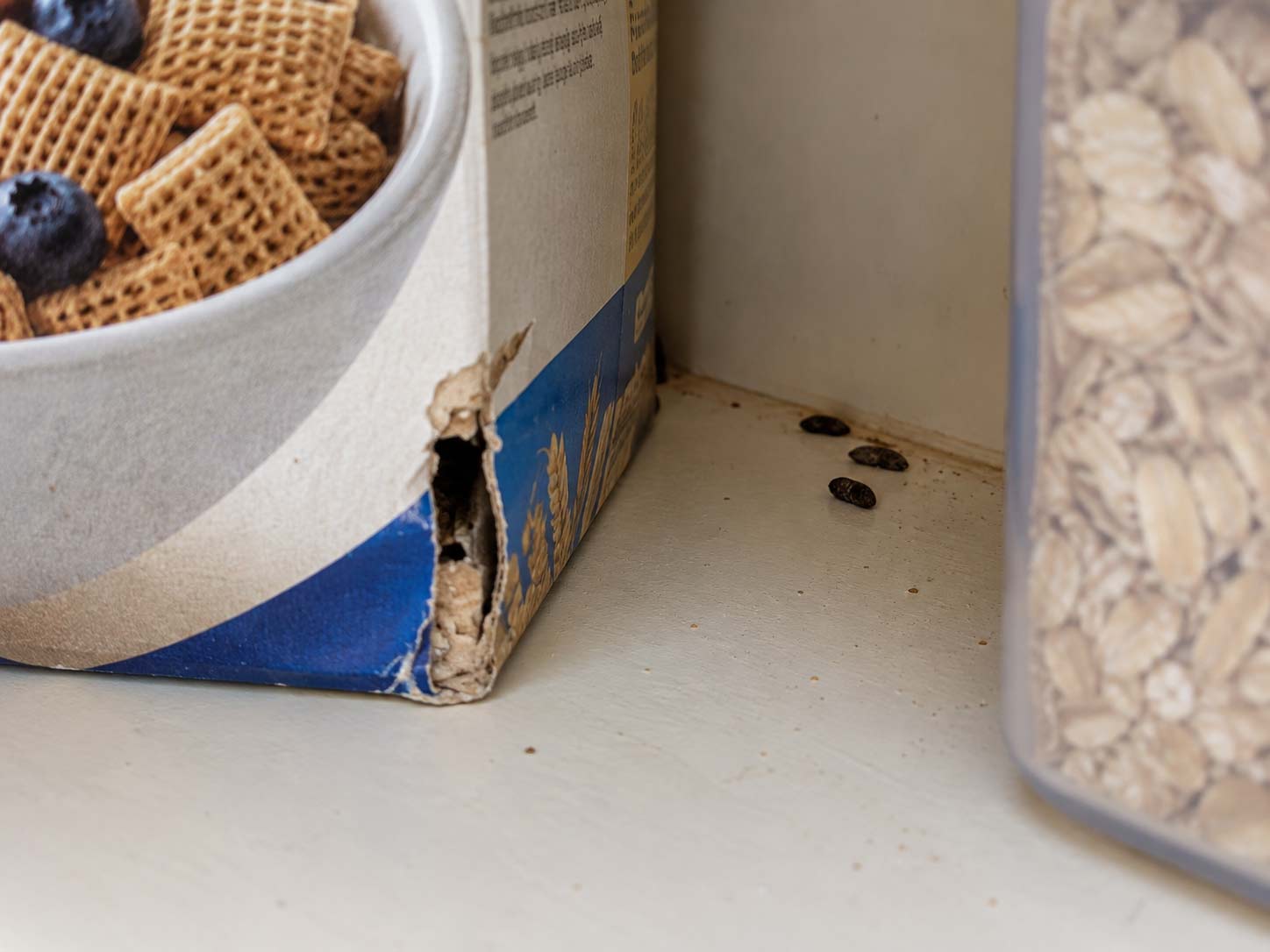
How to Know If Mouse Activity Is Current
Old mouse evidence can remain hidden behind appliances or cupboards for a long time.
Government guidance notes that fresh droppings tend to look softer and shinier, while older droppings become harder and duller.
You should not touch droppings to test their age.
A safer method is to photograph the area, clean it carefully and monitor it. If new droppings appear, fresh damage develops or scratching noises continue, the activity is more likely to be current.
Repeated evidence is much more useful than a single old sign.
What Should You Do If You Find Mouse Droppings?
Rodent waste should be handled carefully.
UK Health Security Agency guidance advises against sweeping or vacuuming rodent droppings because this may make contaminated particles airborne.
Wear gloves, avoid disturbing dry waste unnecessarily and use damp cleaning methods.
You can read more in the UK Government guidance on reducing infection risks from rodents.
Children and pets should be kept away from contaminated areas, and any food that may have come into contact with rodents should be discarded.
Why Did Mice Enter the House?
Finding the signs is only part of the problem.
The next question is why the mice entered and what allowed them to remain.
Accessible food, pet food, clutter and small structural gaps can all contribute. Openings around pipes, doors, cables and other parts of the building may also provide access.
Our article on how mice enter homes covers these access points in more detail.
You can also read our guide to what repels mice immediately to understand which commonly suggested deterrents may help and where their limitations are.
When Should You Get Help?
Further investigation may be needed if fresh droppings continue to appear, scratching noises persist, food packaging keeps being damaged or signs are present in several rooms.
It is also sensible to take action if electrical cables have been gnawed, you cannot locate the entry point or the evidence continues despite removing accessible food.
Repeated activity usually means the source of the problem has not yet been identified.
If the signs continue, you can contact Mouse Hunter for further advice.
Final Thoughts
Learning how to tell if you have mice is mainly about recognising the evidence they leave behind.
Droppings are often the most obvious clue, but scratching noises, gnawed packaging, grease marks, nesting material, unusual smells and small tracks can also reveal hidden activity.
Start by checking kitchens, cupboards, appliances and other sheltered areas, then follow the evidence towards possible hiding places and entry points.
Most importantly, pay attention to whether new evidence keeps appearing. Repeated signs are far more useful than a single old dropping or unexplained noise when deciding whether mice are currently active in your home.


