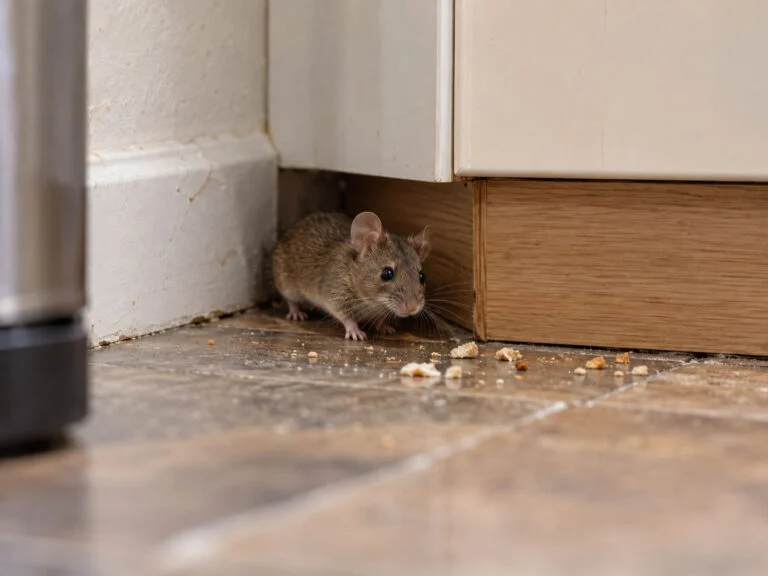
- House mice are usually pregnant for 19 to 21 days.
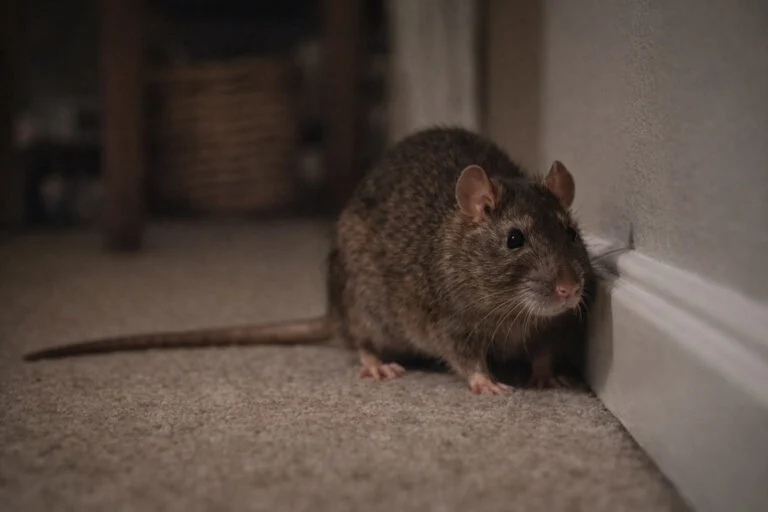
- Brown rats are usually pregnant for 21 to 23 days.
- Start checking for activity as soon as you notice signs.
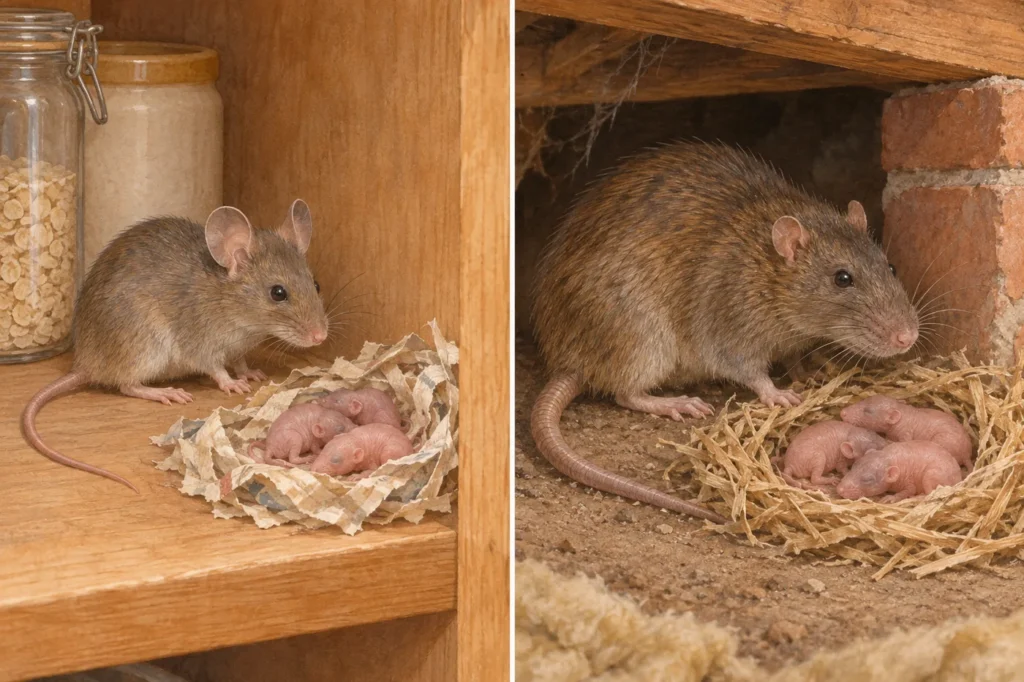
If a house mouse or brown rat is already pregnant when it gets into your home, it could give birth soon after you first see it. Food and sheltered nesting spots give rodents a chance to settle, so start checking as soon as you notice signs.
How fast do house mice breed?
A house mouse pregnancy usually lasts 19 to 21 days from conception. A litter typically has five or six pups. Young house mice can reach breeding age within weeks, so a sheltered nest with a regular food supply can become a persistent problem. Texas A&M AgriLife Extension gives typical breeding figures for house mice.
Check accessible areas near food, such as the cupboard where you store dry goods or the floor around a pet bowl. Mice can use concealed spaces for nesting, including gaps behind cupboards. Note where the signs are concentrated so you can describe the pattern if you need an inspection. University of California IPM guidance on house mice describes their nesting and feeding habits.
How fast do brown rats breed?
A brown rat, also called a Norway rat, is typically pregnant for 21 to 23 days. Litters vary in size and average around seven or eight pups. Young brown rats generally take longer to reach breeding age than house mice. Access to food, water and shelter affects whether rats can establish themselves around a home. Texas A&M AgriLife Extension summarises brown rat reproduction and habitat.
What does one sighting tell you?
A sighting tells you where to start looking. A mouse seen near the kitchen door could be passing through or using a route between a nest and a food source. You may also find droppings before seeing the animal itself.
Record the room, date and where the animal went. If you later spot new gnaw marks, fresh droppings or movement in the same area, share that pattern when arranging an inspection. See our guide to the signs of mice at home for clues to check in accessible places.
What should you do today?
- Secure food. Put dry food and pet food in tightly closed containers, clear crumbs and keep bins shut.
- Record the evidence. Note where you see droppings, gnaw marks or damage to food packaging. Take a photo from a safe distance if it helps. Keep children and pets away from affected areas.
- Arrange an inspection if signs recur. Tell the inspector where you have seen activity and mention possible entry points or suspected nests, especially in areas you cannot access safely.
If you are seeing signs of mice, our mouse control service explains how we investigate activity in the home.
If you suspect rats, see our rat control service for what an inspection and treatment involve.