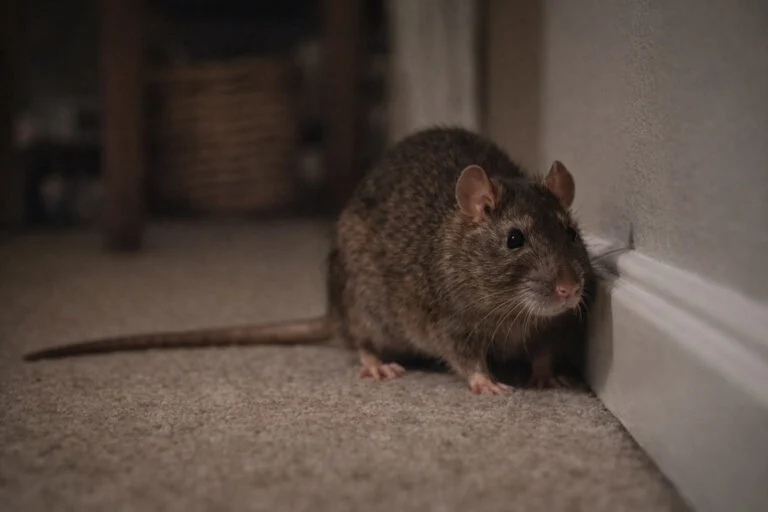
- Brown rats are the main species to consider around homes.
- A dark coat or high location does not identify a black rat.
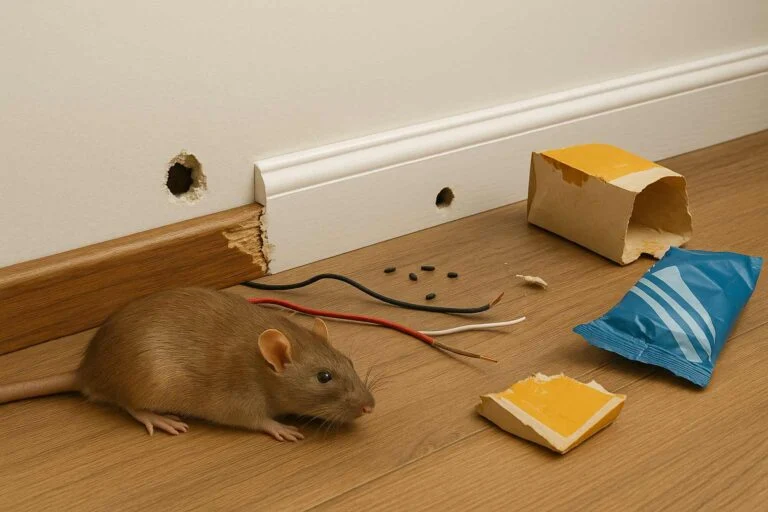
- Record sightings and signs without handling animals or waste.

If you see a rat around a London home or garden, the brown rat is the species you are most likely to be considering. The black rat is a different species, but it should not be presented as an equally common visitor to local homes.
Identification is more useful when a clear sighting is considered alongside the location and other signs. Fur colour alone, or a sound inside a wall, cannot establish the species.
The Brown Rat: The Main Species to Consider
The brown rat, Rattus norvegicus, is found across Britain, including urban areas and gardens. Mammal Society describes the brown rat and its habitats.
An adult has a substantially larger body than a house mouse and a long, sparsely haired tail. Features vary with age and the quality of the sighting, so avoid estimating a species from a fleeting view of its size.
Signs worth recording include sightings, droppings, gnawing and possible burrows. A burrow or dropping on its own still needs interpretation; other animals and old activity can complicate the picture.
The Black Rat: A Rare and Easily Misrepresented Species
The black rat, Rattus rattus, is also known as the ship rat. Its name does not mean that every dark-coloured rat belongs to this species.
Mammal Society reports that black rats have not been recorded in many British cities for decades and describes substantial uncertainty about remaining populations. This is not evidence for claiming that they are routinely found in particular London neighbourhoods.
Black rats are often described as relatively slender, with a proportionally long tail and prominent ears. These are identification clues, not a reliable diagnosis from a distant photograph. A rat seen high up in a building is not automatically a black rat.
Brown Rat, Black Rat or Mouse?
| Animal | Useful context | Common mistake |
|---|---|---|
| Brown rat | Widespread in Britain, including gardens and urban settings. | Assuming that every individual is the same colour or size. |
| Black rat | Very scarce records in modern Britain; identification needs care. | Identifying a dark rat or an animal above ground level as a black rat. |
| House mouse | Smaller animal associated with sheltered indoor spaces. | Relying only on dropping size when young rats may cause confusion. |
The RSPCA rodent guide also distinguishes rats from several kinds of mice. If the evidence is more consistent with mice, read our mouse identification guide.
What Evidence Should You Record?
- A photograph taken from a safe distance, if possible.
- The location, time and direction of a sighting.
- Whether signs are indoors, outdoors or near a shared service route.
- New droppings, gnawing or damage in accessible areas.
- Whether signs continue after cleaning or earlier treatment.
Do not handle the animal, disturb a nest or pick up droppings to obtain a closer identification. Do not approach damaged electrical equipment or enter an unsafe concealed space.
Does the Species Change What You Should Do First?
The immediate priorities are to keep food secure, avoid contact with waste and investigate repeated fresh signs. Identification can inform an assessment, but uncertainty is a reason to seek advice rather than experiment with treatment.
Our guide to dealing with rats at home covers practical next steps. Read about possible rat damage if wiring, materials or food storage have been affected.
Getting an Assessment for Your Home
If you’re unsure which rodent you’ve seen, an inspection is the first step in our rat treatment for domestic properties.